NQ Futures Day Trading Strategies 2026: Risk-Managed Approaches for Retail Traders
Practical NQ futures day trading strategies for 2026 — VWAP reversals, opening range breakouts, and momentum continuation with strict risk rules.
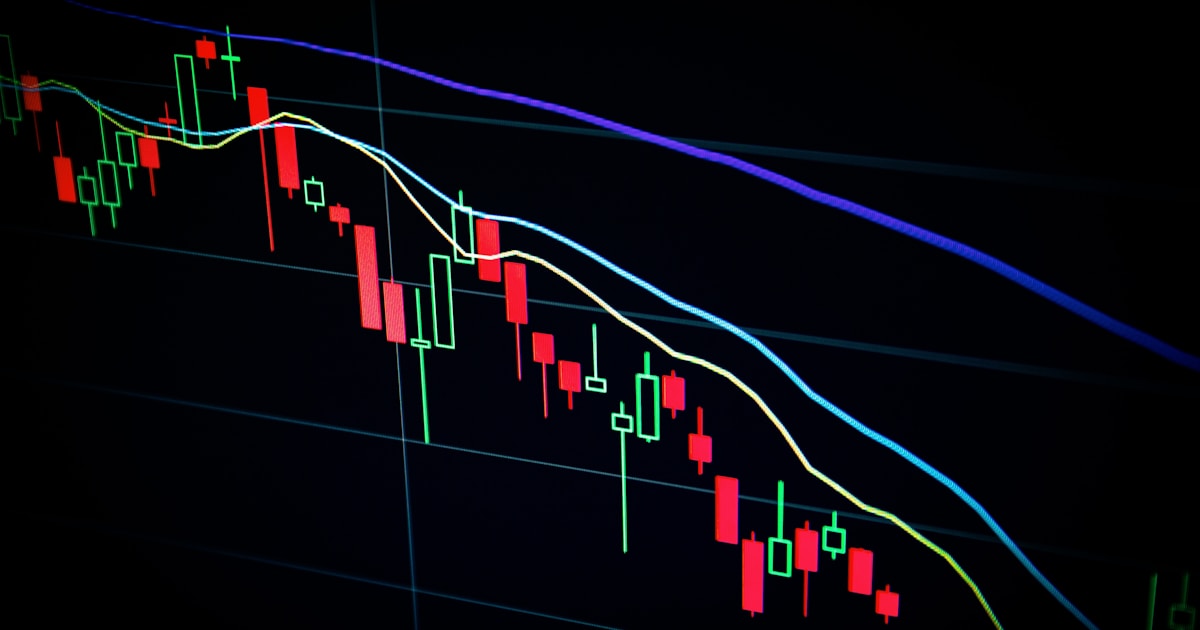
NQ Futures Day Trading Strategies 2026: Risk-Managed Approaches for Retail Traders
Trading NQ futures (Nasdaq-100 E-mini) in 2026 requires a different mindset than even two years ago. Volatility patterns have shifted, algorithmic participation has increased, and the retail trader who relies on gut feel alone gets punished faster than ever.
Here are three strategies I’ve refined through hundreds of live sessions — with the explicit failure conditions that most trading blogs conveniently omit.
Disclaimer: This is educational content, not financial advice. NQ futures carry significant risk. Past performance doesn’t predict future results. Always paper-trade before risking capital.
The 2026 NQ Market Context
Before any strategy, understand the current market structure:
- Average daily range: 80-150 points (higher during CPI/FOMC weeks)
- Optimal trading windows: 9:30-11:30 AM ET and 2:00-4:00 PM ET
- Algorithmic dominance: ~70% of volume is HFT/algo-driven — your edge comes from not trading like them
- Key levels to watch: Previous day VWAP, overnight high/low, and opening 30-minute range
The single biggest shift in 2026: mean reversion still works, but only within defined ranges. Trend-following on NQ without tight stops is account suicide in the current regime.
Strategy 1: VWAP Reversion with Confluence
Core Logic
NQ tends to revert to the Volume Weighted Average Price when it overshoots by more than 1.5 standard deviations — but only when multiple signals confirm the exhaustion.
Setup Conditions (all required)
- Price extends 1.5+ ATR(14) from VWAP
- Volume divergence: price makes new high/low but volume decreases
- RSI(9) reaches 75+ (long reversal) or 25- (short reversal)
- Price approaches a known support/resistance level (previous day high/low, overnight level, or round number)
Entry Rules
- Long reversal: After all four conditions met on the short side, enter on the first 5-minute candle that closes above the previous candle’s high
- Short reversal: Mirror for the long side
- Stop loss: 1.5 ATR from entry (no exceptions)
- Take profit: VWAP or previous swing high/low (whichever is closer)
Where This Setup Fails
- During strong trending days (CPI/FOMC release days) — VWAP reversion gets steamrolled
- When volume is declining across the board (low-conviction moves don’t revert cleanly)
- First 15 minutes of the session (false signals are common during opening noise)
Strategy 2: Opening Range Breakout (ORB)
Core Logic
The first 30 minutes of trading establishes a range. A breakout above the high or below the low with volume confirmation has a statistical edge — but the retest entry is where the real probability lives.
Setup Conditions
- Mark the high and low of the first 30-minute candle (9:30-10:00 AM ET)
- Wait for price to break above the high OR below the low
- Do not enter on the initial break — wait for a retest of the breakout level
- Volume on the breakout candle must exceed the 20-period average by 1.3x
Entry Rules
- Long: Price breaks above 30-min high, pulls back to test it, holds, then enter on the candle that closes above the retest high
- Short: Mirror for breakdown
- Stop loss: Below/above the retest candle (or the ORB extreme, whichever is tighter)
- Take profit: 2:1 reward-to-risk minimum; trail stop after 1:1 reached
Where This Setup Fails
- When the opening range is extremely wide (>40 points) — there’s no follow-through fuel
- On days with no clear directional conviction (inside days)
- If the retest takes more than 3 candles to complete — momentum has already faded
Strategy 3: Momentum Continuation with MACD Divergence Filter
Core Logic
Trend-following works when you filter out the fake breakouts. MACD divergence serves as a trend quality filter — if MACD confirms the move, the continuation probability increases meaningfully.
Setup Conditions
- NQ is trending (20 EMA clearly sloping up or down)
- Price pulls back to the 20 EMA or 50% Fibonacci retracement
- MACD histogram pulls back toward zero but does NOT cross (no divergence against the trend)
- Volume increases on the resumption candle
Entry Rules
- Long: Pullback to support zone, MACD histogram hooks up (still positive), enter on close above previous candle high
- Short: Mirror for downtrends
- Stop loss: Below/above the swing low/high of the pullback
- Take profit: Previous swing high/low or 2:1 R:R, trail after 1:1
Where This Setup Fails
- In range-bound markets — there’s no trend to continue
- When the pullback extends beyond the 61.8% Fib level — trend is likely reversing
- During lunch session (12:00-2:00 PM ET) — low volume, unreliable signals
Risk Management: The Non-Negotiable Rules
These aren’t suggestions. They’re the difference between a trader who survives 2026 and one who doesn’t.
Position Sizing
- Maximum risk per trade: 1% of account equity
- Maximum daily loss: 3% of account equity (stop trading after hitting this)
- NQ point value: $20/point — calculate your stop in points, not dollars, before entering
The Two-Strike Rule
If two consecutive trades stop out on the same strategy, switch strategies or stop trading for the session. Revenge trading after two losses is the #1 account killer.
Pre-Session Checklist
- Check economic calendar — avoid trading 30 minutes before/after major releases
- Review overnight session high/low and volume profile
- Set maximum loss limit for the day
- Identify key levels for each strategy
- Confirm your internet connection and platform are stable
Post-Session Review
- Log every trade with entry reason, exit reason, and emotion state
- Calculate your R-multiple for the day
- Identify which setups worked and which failed
- Note any rules you broke (be honest)
Common Mistakes That Destroy Retail Traders
1. Trading Without a Pre-Defined Plan
Entering because “it looks like it’s going up” is not a strategy. If you can’t write your entry rules on a Post-it note, you’re not ready to trade.
2. Moving Your Stop Loss
You moved your stop once. Then twice. Then you blew up a week’s worth of profits on one trade. Sound familiar? Set your stop before entry and never touch it.
3. Overtrading on Low-Conviction Setups
Three clean setups per session is better than twelve marginal ones. Quality over quantity — the market rewards patience, not activity.
4. Ignoring the Time of Day
Not all hours are created equal. The first and last two hours of the regular session have the most volume and cleanest signals. Lunch hour is where accounts go to die slowly.
5. No Trading Journal
If you can’t review what you did wrong, you’ll repeat it. A simple spreadsheet with date, setup, entry, exit, R-multiple, and notes is enough to start.
Backtesting Before Live Trading
Before risking real money:
- Paper trade for at least 20 setups per strategy (minimum 2 weeks)
- Track win rate, average winner, average loser, and profit factor
- Acceptable baseline: 45%+ win rate with 1.5:1 average R:R
- If you can’t make it work on sim, you won’t make it work live
The Honest Summary
- VWAP Reversion: Best for range-bound days, skip on major news days
- ORB Breakout: Highest probability setup but requires patience for the retest
- Momentum Continuation: Best trending-day strategy but useless in chop
No strategy works every day. The edge comes from knowing which strategy fits today’s market and having the discipline to sit out when none of them do.
Next step: Pick one strategy, paper-trade it for 20 setups, and track your results honestly. The market will be there tomorrow — there’s no rush.